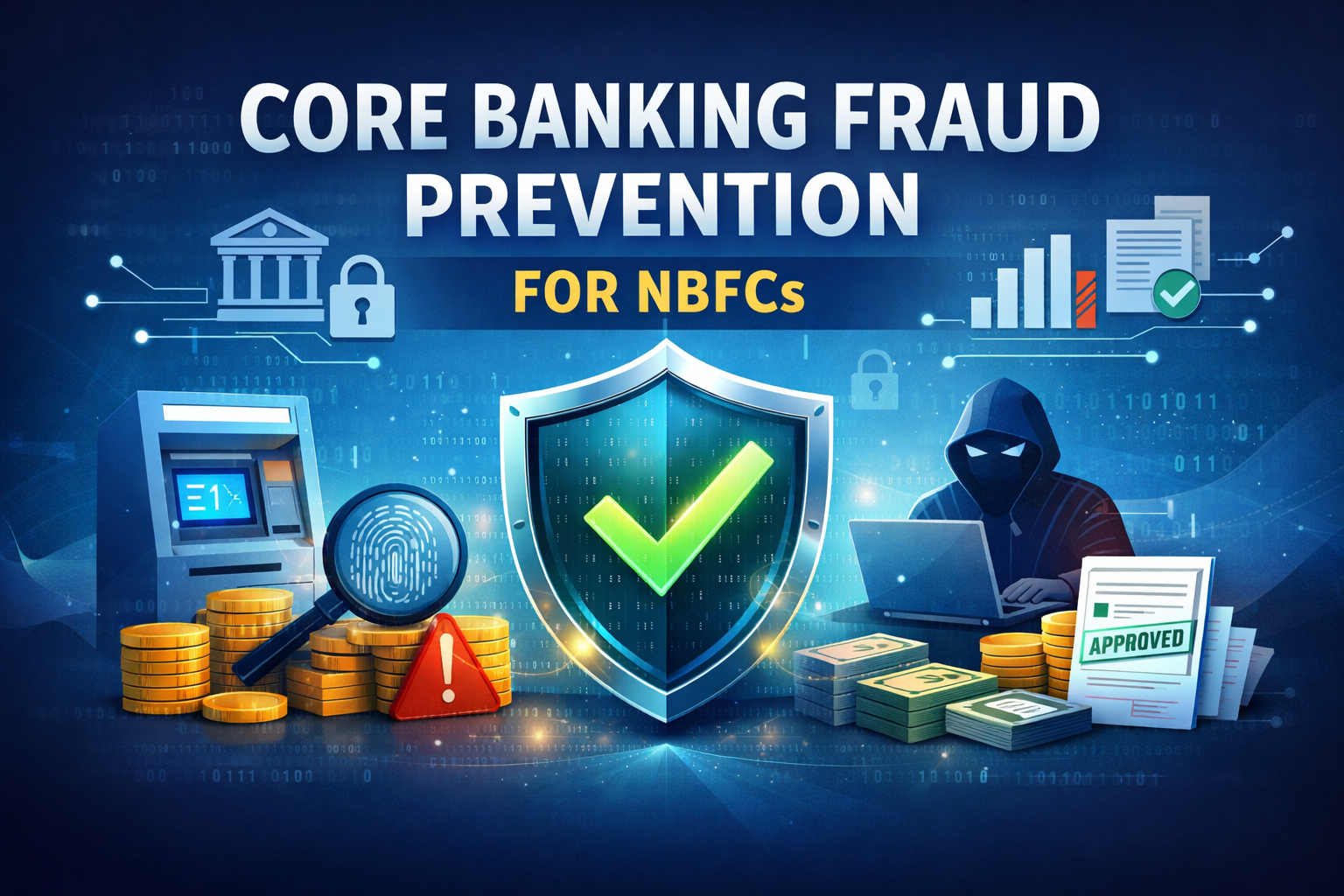
For decades, NBFCs have relied on manual processes and fragmented systems to manage lending, collections, and accounting. As transaction volumes scale, these legacy setups expose institutions to fraud, reconciliation gaps, and revenue leakage. Core banking fraud prevention is now critical for NBFCs aiming to protect profitability and operational integrity.
Core banking fraud prevention for NBFCs is no longer optional. A modern, automated core banking system enables a clear path to zero pilferage by enforcing standardization, real-time oversight, and immutable audit trails—protecting profitability, compliance, and customer trust.
The Risk Reality: Why NBFCs Need Core Banking Fraud Prevention
Many NBFCs still operate with a mix of spreadsheets, disconnected software, agent-led collections, and semi-manual reconciliation. While familiar, these systems introduce serious operational risk.
The most common risk areas are:
1) Human Error in Manual Processes
Manual data entry across loan origination, disbursement, and collections often leads to mismatches between ledgers, cash positions, and customer balances. Over time, these errors accumulate and obscure the true financial position.
2) Fraud and Revenue Leakage
Where cash handling, agent collections, or loosely controlled system access exists, the risk of pilferage increases. Without real-time visibility, unauthorized activity can remain undetected until audit time—often too late.
3) Delayed Reconciliation and Audit Gaps
End-of-day or month-end reconciliation becomes slow and reactive. Delays in identifying discrepancies raise red flags during audits and increase regulatory exposure.
A modern core banking platform addresses these risks systematically through automation and centralized control.
Pillar 1: Automation and Standardization to Eliminate Errors
The foundation of zero pilferage is process standardization. Core banking automation ensures that every transaction follows predefined, system-driven rules.
Key benefits include:
- Uniform transaction workflows:
Loan disbursement, interest calculation, EMI schedules, and collections follow identical logic across branches, products, and teams. - Straight-Through Processing (STP):
Once a loan is approved, the system automatically generates repayment schedules, posts ledger entries, and tracks dues—reducing manual touchpoints. - Single source of truth:
All customer and loan data resides in a centralized database. Any transaction update is reflected instantly across accounting, reporting, and customer channels.
This level of automation dramatically reduces operational errors and improves financial accuracy.
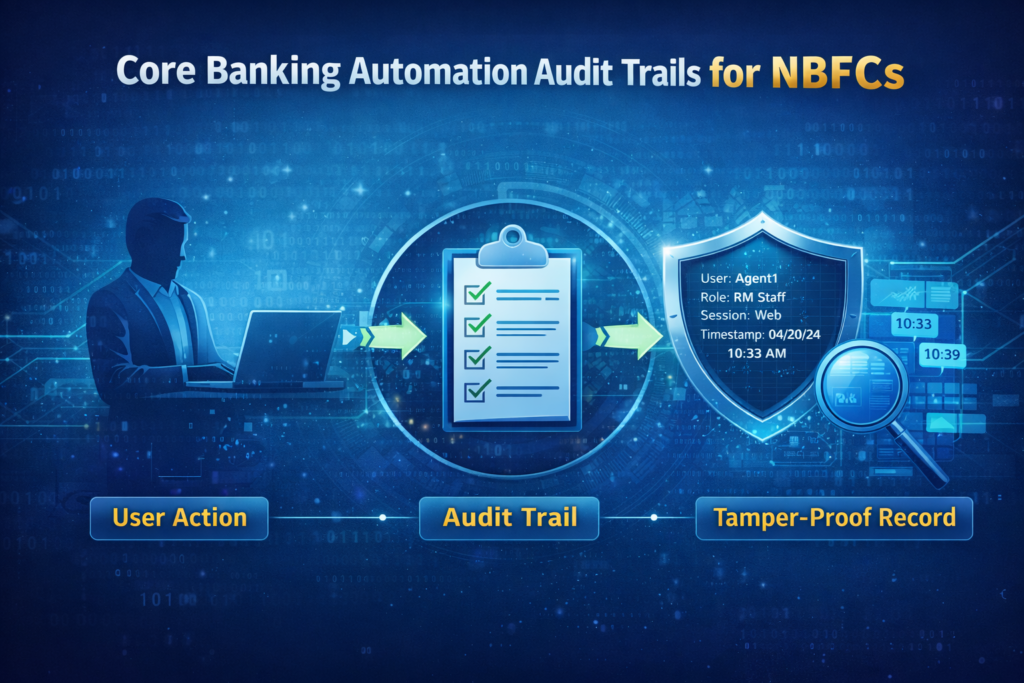
Pillar 2: Core Banking Fraud Prevention with Immutable Audit Trails
One of the strongest fraud-prevention mechanisms in modern CBS platforms is the digital audit trail.
Every action within the system is recorded with complete traceability:
- Who, what, when, and where:
Each transaction captures the user, timestamp, role, and access channel. - Tamper-proof records:
Entries cannot be edited or erased. Any correction is logged as a separate, linked transaction—creating a transparent chain of events. - Role-based access control (RBAC):
Staff access is strictly permission-based. No single individual can initiate, approve, and close a transaction independently.
This digital accountability acts as a strong deterrent to internal fraud and simplifies investigations when discrepancies arise.
Pillar 3: Compliance Readiness and Customer Trust
Automation and auditability directly translate into stronger compliance and higher trust.
Simplified Compliance for NBFCs
Regulatory reporting becomes significantly easier with an automated CBS:
- System-generated reports aligned with RBI requirements
- Faster audit cycles with read-only auditor access
- Reduced dependency on manual data compilation
This minimizes regulatory risk and audit friction.
Strengthening Customer Confidence
Customers expect transparency and timely information. A modern core banking system enables:
- Real-time account and loan visibility
- Automated SMS and email alerts for transactions
- Faster issue resolution due to accurate data
When customers see consistent, transparent records, confidence in the institution increases.

The ROI of Core Banking Fraud Prevention for NBFCs
Investing in core banking automation is not just a technology upgrade—it is an investment in operational integrity.
Key returns include:
- Lower operational costs:
Reduced reconciliation effort, fewer errors, and faster reporting. - Fraud prevention and loss reduction:
Early detection and prevention of pilferage protect revenue. - Scalable growth:
Clean books, strong controls, and digital readiness support portfolio expansion and new product launches.
Making the Shift to Zero Pilferage
As NBFCs scale, manual controls and fragmented systems become liabilities. A modern, automated core banking platform replaces uncertainty with transparency and control.
By adopting core banking fraud prevention for NBFCs, institutions move toward zero pilferage—ensuring accuracy, compliance, and long-term trust.
The path forward is clear:
automation over manual effort, transparency over opacity, and control over risk.
Take the Next Step
Protect your NBFC from fraud, leakage, and compliance risk.
Discover how SmartCBS enables automated controls, real-time audit trails, and scalable core banking designed for modern NBFC operations.
